
Kurzanleitung herunterladen
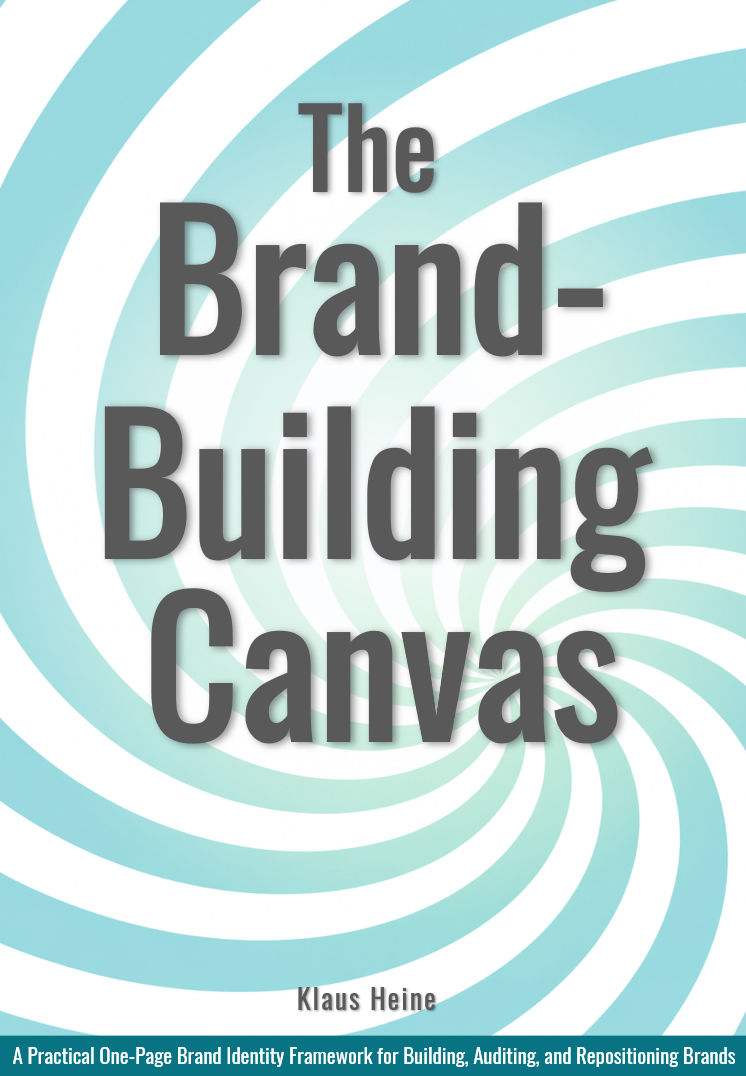
The Brand-Building Canvas
Eine praxisorientierte Einführung in das Rahmenmodell zur Markenidentität für Markenaufbau, Markenanalyse und Repositionierung.
von Klaus Heine, emlyon business school
Über die Publikation
Was die Kurzanleitung bietet
Der Canvas kann eingesetzt werden, z.B. um:
- Bestehende Marke analysieren
- Differenzierung schärfen
- Neue Marke entwickeln
- Markenplattform entwickeln
- Kreativbriefing erstellen
- Repositionieren & Rebranden
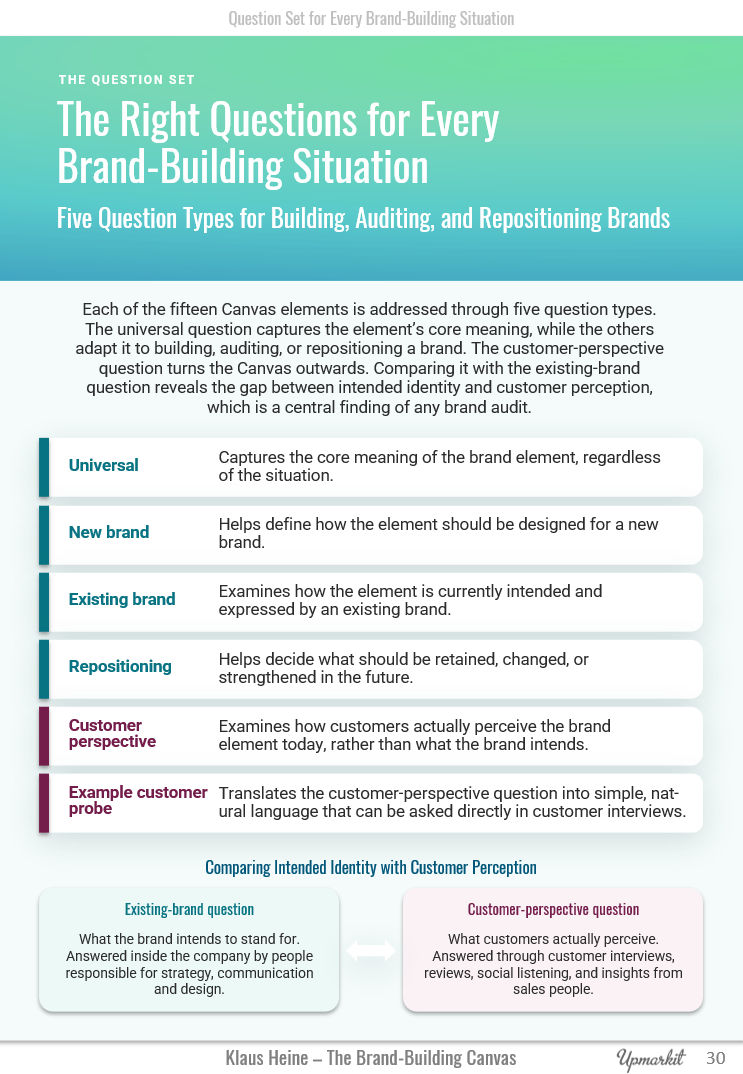
Der Brand-Building Canvas ist ein kompaktes Rahmenmodell, mit dem sich erfassen, analysieren und gestalten lässt, wofür eine Marke steht. Er bündelt die zentralen Entscheidungen zur Markenidentität in einer übersichtlichen visuellen Struktur. So können Markenteams die einzelnen Themen systematisch bearbeiten und gleichzeitig erkennen, wie sie miteinander zusammenhängen. Der Canvas umfasst neun Blöcke und 20 Elemente. Sieben Blöcke beschreiben die Identität der Marke, die beiden übrigen das Geschäft, auf dem sie beruht. Die Publikation stellt den Aufbau des Canvas vor, erläutert jedes Element anhand kurzer Beispiele bekannter Marken und bietet zu jedem Element passende Leitfragen.
Sie richtet sich an Unternehmer, Markenverantwortliche, Berater und Studierende, die eine Marke systematischer verstehen und eine solide Grundlage für die vertiefende und kreative Arbeit an Produkten, Design und Kommunikation schaffen möchten. Der Canvas kann unter anderem eingesetzt werden, um eine bestehende Marke zu analysieren, ihre Differenzierung zu schärfen, eine neue Marke zu entwickeln, eine Markenplattform oder ein Kreativbriefing zu erarbeiten sowie Repositionierungs- und Rebranding-Prozesse zu unterstützen.
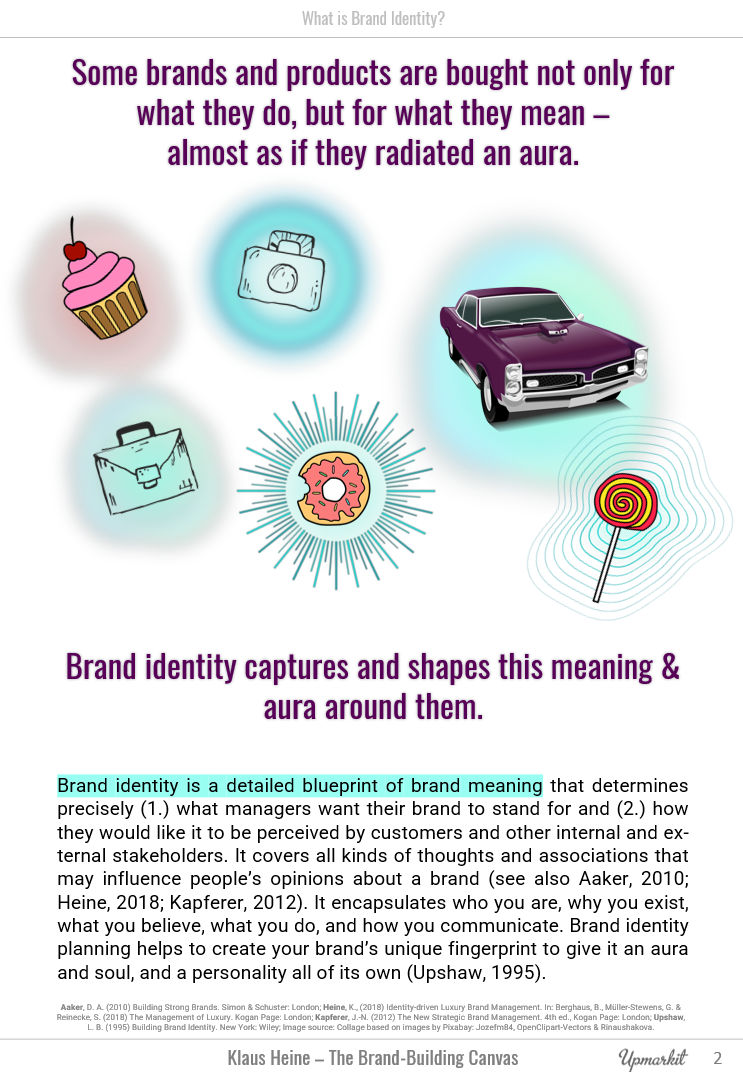
Die Publikation versteht Markenidentität nicht lediglich als Logo oder als Ansammlung visueller Elemente, sondern als detaillierten Bauplan der Bedeutung einer Marke: was sie erreichen will, was sie wertvoll und unverwechselbar macht, für wen sie entwickelt wurde, welchen Charakter sie verkörpert, welche Beziehung sie zu ihren Kunden aufbaut, wo sie erlebbar wird und wie sie zum Ausdruck bringt, wofür sie steht. Diese Aspekte bilden die sieben Identitätsbausteine des Canvas.
In der Kurzanleitung
Ein Blick in die Publikation
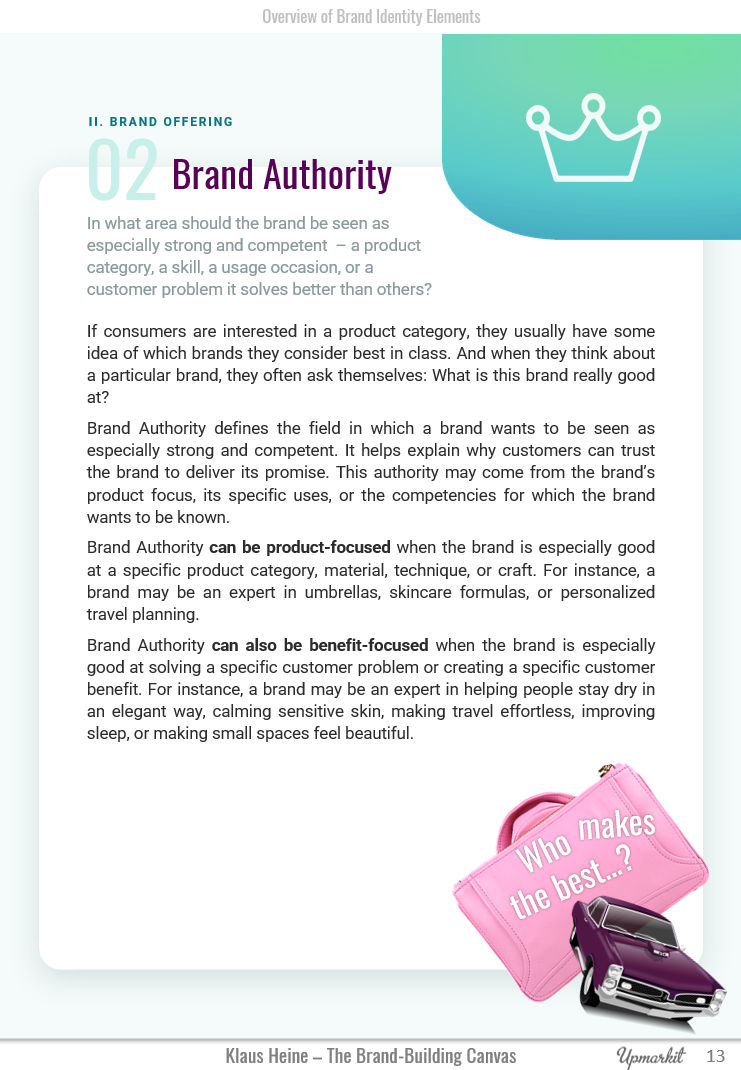
Jedes Element wird kurz definiert und anhand bekannter Markenbeispiele und Leitfragen erläutert.
Nutzungsrechte
CC BY-SA 4.0
Der Canvas
Der Brand-Building Canvas selbst darf unter der Creative Commons Namensnennung – Weitergabe unter gleichen Bedingungen 4.0 International Lizenz (CC BY-SA 4.0) frei genutzt und weitergegeben werden, auch für kommerzielle Zwecke.[...]
Namensnennung
Genauer gesagt, „BY“ bedeutet „durch / von“ im Sinne von „das Werk ist von …“ und verpflichtet Nutzer dazu, den Urheber immer zu nennen. Bei jeder Nutzung muss klar erkennbar sein, dass der Brand-Building Canvas von Klaus Heine stammt. Bitte verwenden Sie folgende Form der Namensnennung: Brand-Building Canvas © Klaus Heine – Upmarkit.com
Für Bearbeitungen oder spezialisierte Versionen des Brand-Building Canvas wird folgende Namenskonvention empfohlen: Brand-Building Canvas: [Themenbereich] Edition, z. B. Brand-Building Canvas: Hospitality Edition.
Weitergabe unter gleichen Bedingungen
„SA“ (ShareAlike) bedeutet, dass Übersetzungen, Bearbeitungen oder Weiterentwicklungen ebenfalls unter derselben Lizenz veröffentlicht werden müssen. Wer also eine neue Version erstellt, darf diese verbreiten, muss sie aber ebenfalls als CC BY-SA freigeben und die Quelle nennen. [...]
© Alle Rechte vorbehalten
Diese Veröffentlichung
Diese Publikation kann kostenlos heruntergeladen und gelesen werden, steht jedoch nicht unter einer offenen Lizenz. Die Vervielfältigung, Weitergabe, Wiederveröffentlichung, Übersetzung oder anderweitige Nutzung bedarf der schriftlichen Genehmigung.
Diese Publikation zitieren
Heine, K. (2026) The Brand-Building Canvas: A Practical One-Page Brand Identity Framework for Building, Auditing, and Repositioning Brands, Upmarkit. DOI: 10.5281/zenodo.21811673.