
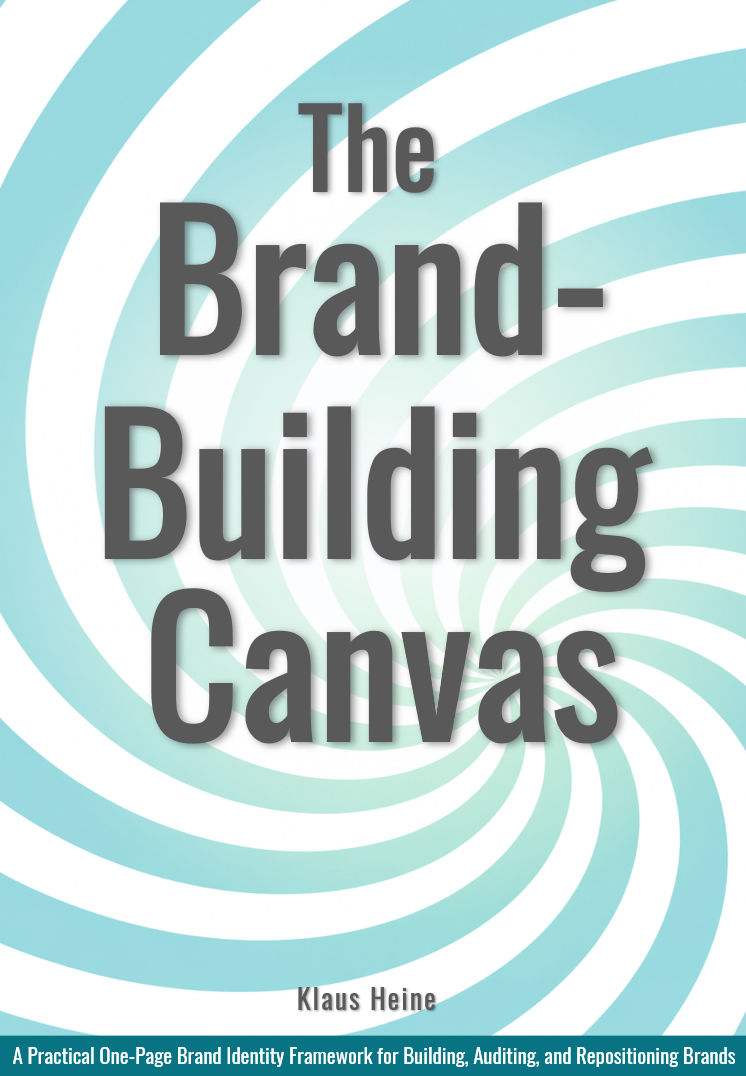
Download the Quick Guide
The Brand-Building Canvas
A practical introduction to the brand identity framework for building, auditing, and repositioning brands.
by Klaus Heine, emlyon business school
About
What the Guide does
Use the Canvas to:
- Audit an existing brand
- Sharpen differentiation
- Create a new brand
- Build a brand platform
- Write a creative brief
- Reposition & rebrand
The Brand-Building Canvas is a one-page framework for capturing, analyzing, and shaping what a brand stands for. It brings the key decisions of brand identity planning together in a single visual model, so brand teams can work through them in a structured way and see how they connect. The Canvas has nine building blocks and 20 elements: seven blocks describe the brand identity, the other two the business behind it. The publication introduces the structure of the Canvas, explains every element with short examples from familiar brands, and provides a set of guiding questions for every element.
It is written for entrepreneurs, brand managers, consultants, and students who want to understand a brand more systematically and have a sound basis for deeper, more creative work on products, design, and communication. Typical uses are to audit an existing brand, sharpen its differentiation, create a new brand, develop a brand platform or creative brief, and support repositioning and rebranding.
Rather than presenting brand identity as a logo or a collection of visual elements, the publication treats it as a detailed blueprint of brand meaning: what it aims to achieve, what makes it valuable and distinctive, whom it is designed for, what kind of character it embodies, how it relates to customers, where it comes to life, and how it expresses what it stands for – the seven identity blocks of the Canvas. .
Inside the Guide
A Look at the Pages
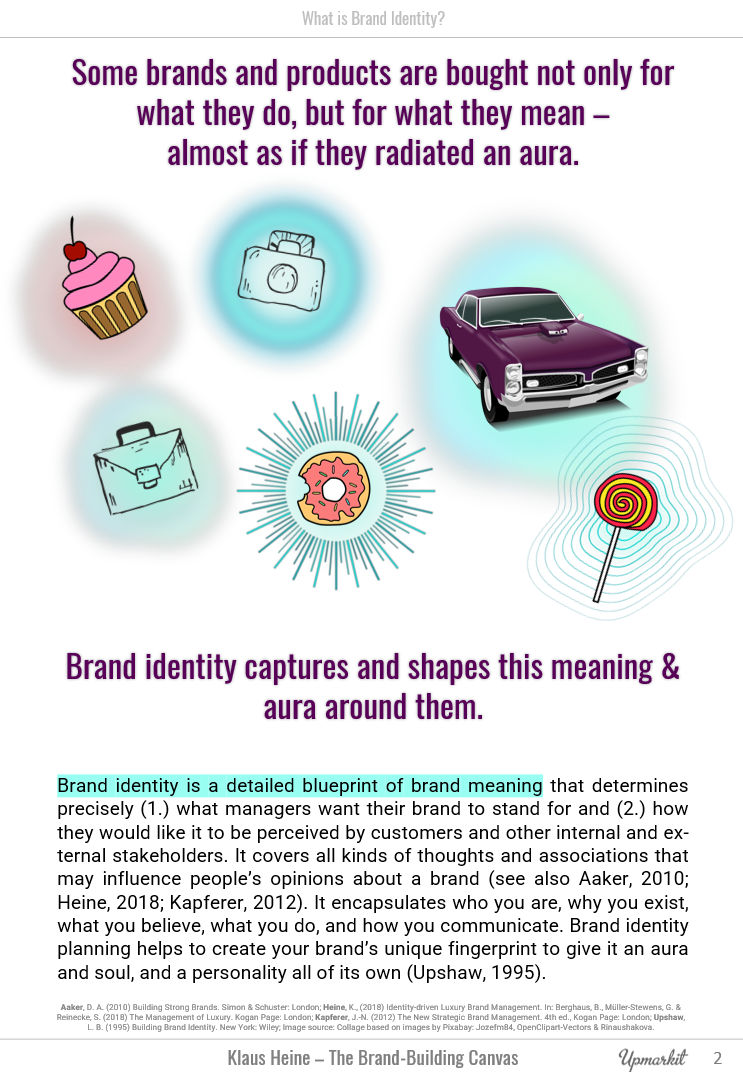
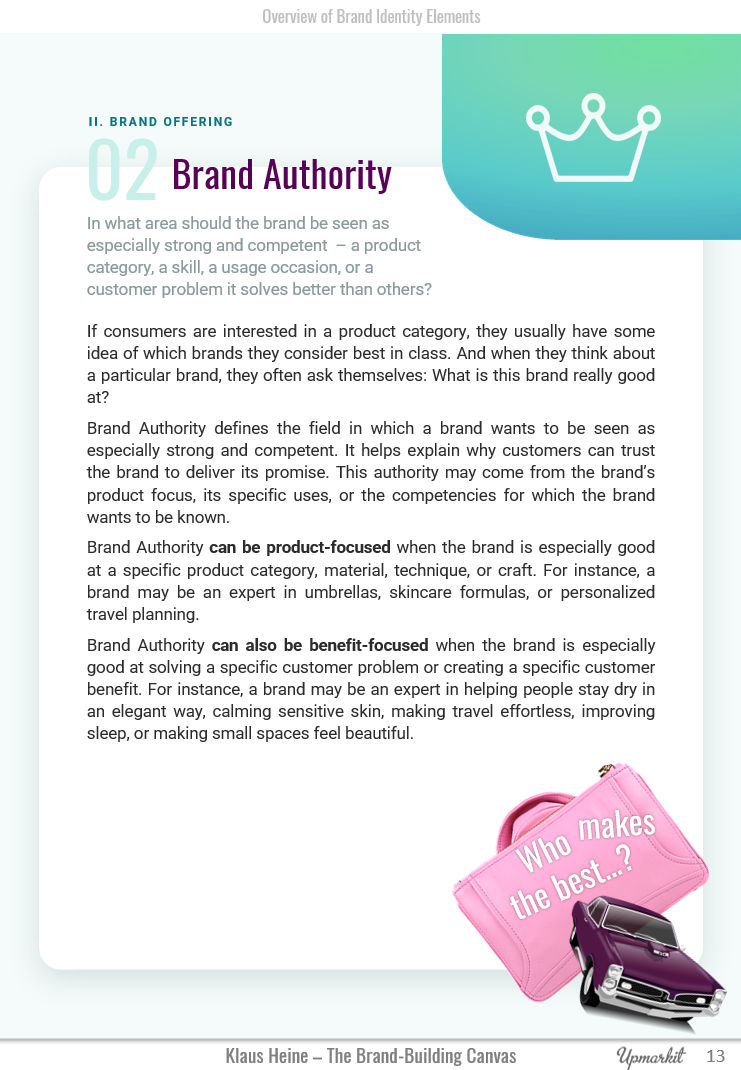
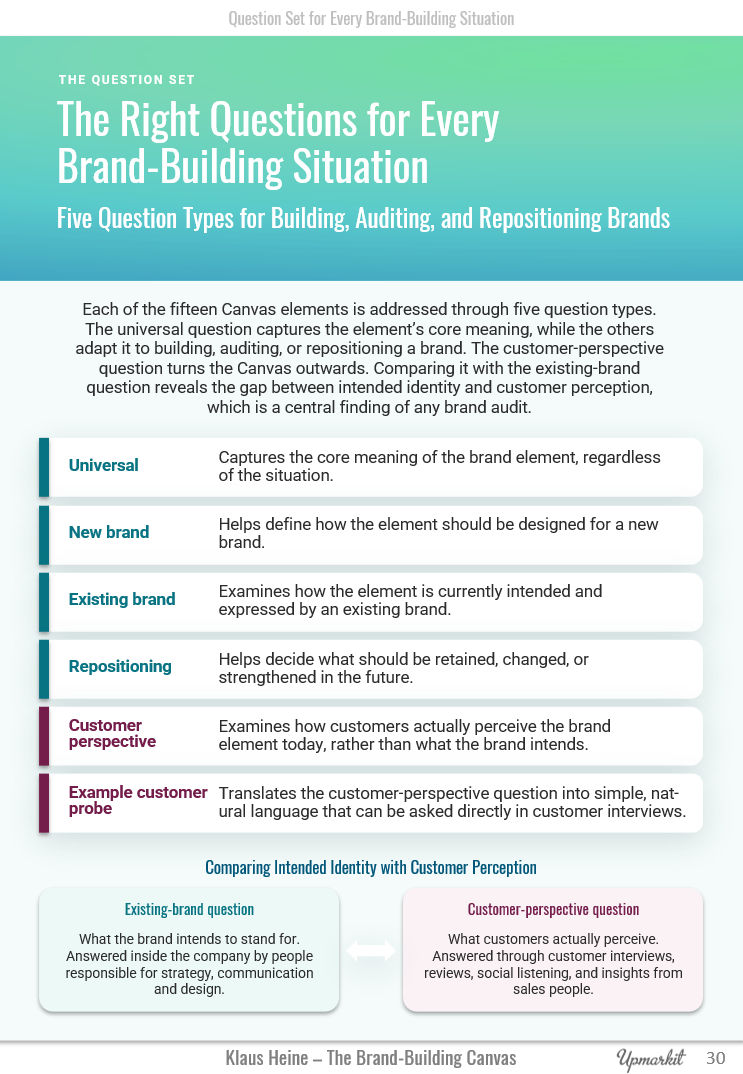
Every element comes with a short definition, examples from familiar brands, and guiding questions.
Rights of Use
CC BY-SA 4.0
The Canvas
The Brand-Building Canvas itself is free to use and share under the Creative Commons Attribution – ShareAlike 4.0 International Licence (CC BY-SA 4.0), including for commercial work. [...]
Attribution
More specifically, “BY” means “the work is by …” and requires users to always credit the author. In every use, it must be clear that the Brand-Building Canvas was created by Klaus Heine. Please use the following attribution format:
Brand-Building Canvas © Klaus Heine – Upmarkit.com
For adaptations or specialized versions of the Brand-Building Canvas, the following naming convention is suggested:
Brand-Building Canvas: [Topic] Edition, e.g. Brand-Building Canvas: Hospitality Edition.
ShareAlike
“SA” (ShareAlike) means that translations, adaptations, or modifications must also be published under the same license. Anyone creating a new version may distribute it, but must also release it under CC BY-SA and credit the source. [...]
© All rights reserved
The publication
This guide is © 2026 Klaus Heine. It is free to download and read, but it is not published under an open licence: reproduction, redistribution, republication, translation, or reuse of its text and figures requires written permission.
Cite this Publication
Heine, K. (2026) The Brand-Building Canvas: A Practical One-Page Brand Identity Framework for Building, Auditing, and Repositioning Brands, Upmarkit. DOI: 10.5281/zenodo.21811673.